


Everything you need to know before your brand clears customs.
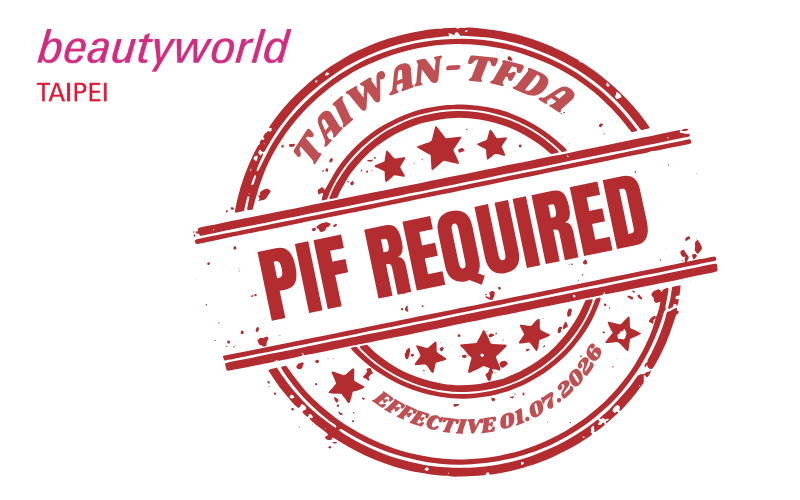
A Product Information File (PIF) is simply the technical file that proves your cosmetic product is safe and correctly labelled before it reaches shelves in Taiwan.
Think of it as your homework binder, not a hurdle. It isn't something to be intimidated by: most of what goes into it (formula, safety data, test reports) is very likely material you already have from selling elsewhere. The key thing to understand is that Taiwan doesn't run a pre-approval system, the government doesn't review or sign off on your PIF before you're allowed to sell; you self-file your notification and keep the PIF ready and complete on your side. It only comes into play if TFDA asks to inspect it, so the real requirement is being organized and truthful, not clearing some active gatekeeper before launch.
01 The Basics of PIF
What a PIF actually is, and why Taiwan introduced it.
What exactly is a PIF?
A Product Information File is the technical dossier that proves a cosmetic product is safe and correctly labelled before it ever reaches a Taiwanese shelf. It sits underneath the product notification you already file with the Taiwan Food and Drug Administration (TFDA) — notification tells TFDA a product exists, the PIF is the evidence file that backs it up.
Is this new, or has it always been required?
Product notification has been mandatory in Taiwan since 2021, but the PIF requirement was phased in gradually so the industry could adjust. The rollout ran in three stages between 2024 and 2026, and as of 1 July 2026, it now covers virtually every cosmetic category — the transition is complete.
Why did Taiwan introduce this at all?
It's part of a broader shift toward a documentation-based safety system, similar in spirit to the EU's PIF/CPSR model, the UK's SCPN, or MoCRA safety substantiation in the US. Instead of relying only on a light-touch notification, TFDA now expects brands to hold complete evidence — formulation, manufacturing, safety data — that can be inspected on demand.
Does the PIF replace product notification?
No — the two work together. Notification is the market-entry filing; the PIF is the supporting technical file, and your notification evidence actually becomes one of the documents inside your PIF. Taiwan does not require pre-market approval in the way some markets do, but a product without a complete PIF can no longer legally be sold, even if it was notified.
How long is my PIF valid for?
Taiwan's cosmetic product notification is valid for three years, after which it must be extended by filing within the three months before expiry.
If your product's components have changed, you must re-notify the TFDA and submit a new PIF.
02 Who PIF applies to
If you're an overseas exhibitor considering the Taiwan market, this is the part that actually changes how you operate here.
Do I have to hand my formula over to the public, or my competitors?
No.
Your exact recipe, the formula, ratios, and any proprietary ingredient combinations will stay confidential between your brand, your Taiwan importer, and the regulator.
The PIF file will only be made avalible only to TFDA for review and inspections. It will not be shared with retailers, distributors, competitors, or the general public.
If you're especially protective of a signature formulation, it's still worth putting a confidentiality or non-disclosure agreement in place with your importer — regulatory confidentiality covers TFDA's handling of the file, not necessarily every internal handling step on the ground.
Does this apply to my brand if I'm based outside Taiwan?
Yes. The requirement applies to essentially all cosmetics placed on the Taiwanese market, whether manufactured locally or imported. The only notable exemption is handmade solid soap produced by makers exempt from factory registration — everything else, foreign brands included, needs a compliant file.
Can I file directly with TFDA as a foreign company?
Not directly. For imported products, an eligible Taiwan importer generally handles notification and keeps the PIF available for inspection, along with importer information on the label, cooperation with TFDA inspections, and post-market duties like adverse-event coordination and recalls. Your brand's job is to supply the underlying technical evidence - formula, manufacturing and GMP records, test reports, and safety data. The importer needs to build a compliant file based on these information.
Who signs off on the safety assessment inside the PIF?
A qualified safety assessor must review and sign the safety conflusion, and the signatory needs official training credentials under Taiwan's frame work. (More information on the TFDA website)
If your brand already works with an EU-qualified cosmetic safety assessor, the expertise usually transfers, however, the signatory still needs to meet Taiwan's specific qualification standard.
Can I reuse my EU, UK, US, or ASEAN dossier instead of starting from scratch?
Largely, yes.
Existing CPSR files, UK SCPN submissions, MoCRA safety substantiation, or ASEAN notification dossiers usually contain most of the raw technical content a Taiwan PIF needs: formulation data, stability and microbiological testing, toxicological information.
The TFDA will need local adaptation, such as Chinese or English documentation language, Taiwan-specific ingredient and INCI rules, the Taiwan importer/manufacturer structure, and a signatory qualified under Taiwan's standard.
Treat the process as a gap assessment against your existing package, not a rebuild from zero.
03 What's inside PIF
A compliant PIF covers 16 basic categories of information.
Some high-risk product might require extra testing requirements if needed.
01 Basic product information
Product name, category, dosage form and intended purpose.
05 GMP compliance
Certificates or self-declarations for the manufacturing facilities.
09 Physicochemical data
Physical and chemical characteristics of the product and its ingredients.
13 Antimicrobial effectiveness
Preservative-efficacy testing where relevant.
02 Notification evidence
Proof the product has already been notified to TFDA.
06 Manufacturing methods
The manufacturing methods and procedures used.
10 Ingredient toxicology
Toxicological data supporting each ingredient's safety.
14 Functional substantiation
Supporting information for any functional claims made.
03 Ingredients & contents
Full ingredient names with each one's individual concentration.
07 Conditions of use
Body area, dose, frequency, and target population.
11 Stability testing
Reports confirming the product holds up over its shelf life.
15 Packaging materials
Information on materials that contact the product directly.
04 Packaging & labels
Outer packaging, containers, labels, or leaflets — matching what ships.
08 Adverse effects
Known reactions associated with the product's use.
12 Microbiological testing
Reports confirming microbial safety.
16 Safety information
Signed, dated safety conclusion plus evidence of the signatory's qualification.
What language does the PIF need to be in?
Traditional Chinese or English. Documentation originally prepared in another language will need translation before it can support a Taiwan filing, so factor that into your timeline if your existing dossier is, say, in French, Korean, or Japanese.
Does the PIF need to be physically stored in Taiwan?
It can be kept in written or electronic form, but it must be held by the Taiwan manufacturer or importer and be available for TFDA inspection on request. Whoever holds the file on your behalf needs access to the complete dossier for inspection purposes.
Do I need stability, microbiological, and antimicrobial testing for every single product?
Not necessarily in the same way for every SKU (stock keeping unit). These reports sit among the standard PIF categories, but a qualified safety-report signatory can document adequate scientific reasoning to omit a given test for a specific product's characteristics. This will vary based on the product, which is why you need a signatory's expertise for PIF.
Does the label on the product need to be in Chinese?
Yes, the label and its details need to appear in Chinese or internationally recognized symbols (full INCI ingredient names may stay in English).
Expect to have your product name, usage and storage instructions, net content, ingredients, manufacturer/importer information, and other required details.
04 Getting Started with PIF
How brands are turning this into an advantage rather than a hurdle.
Isn't this just a barrier to entering Taiwan?
PIF raises the bar, and it also raises the floor for everyone. Brands arrive with a clean, complete PIF move faster through notification, face fewer inspection surprises, and can lean on that compliance readiness as a credibility signal with Taiwanese distributor and retail buyers.
First-movers on PIF readiness are positiong this as a competitive advantage, rather than a cost of entry.
Where do I even start if I've never sold in Taiwan before?
- Inventory on what you already have: CPSR, MoCRA, UK SCPN, or ASEAN documentation is the best place to start.
- Idetify eligible Taiwan importers early, your relationship with the importer will shape the whole filing, from notification through PIF avalibility.
- Flag which of your ingredients or claims might need extra local review against Taiwan's own restricted-ingredient list.
- Reserve time for translation, Chinese label review, and a locally qualified safety assessor's sign-off.
Can Beautyworld Taipei help with any of this?
YES - connecting exhibitors with Taiwanese compliance partners and safety-assessment (SA) resources is part of what we help coordinate ahead of the show, alongside distributor and buyer introductions.
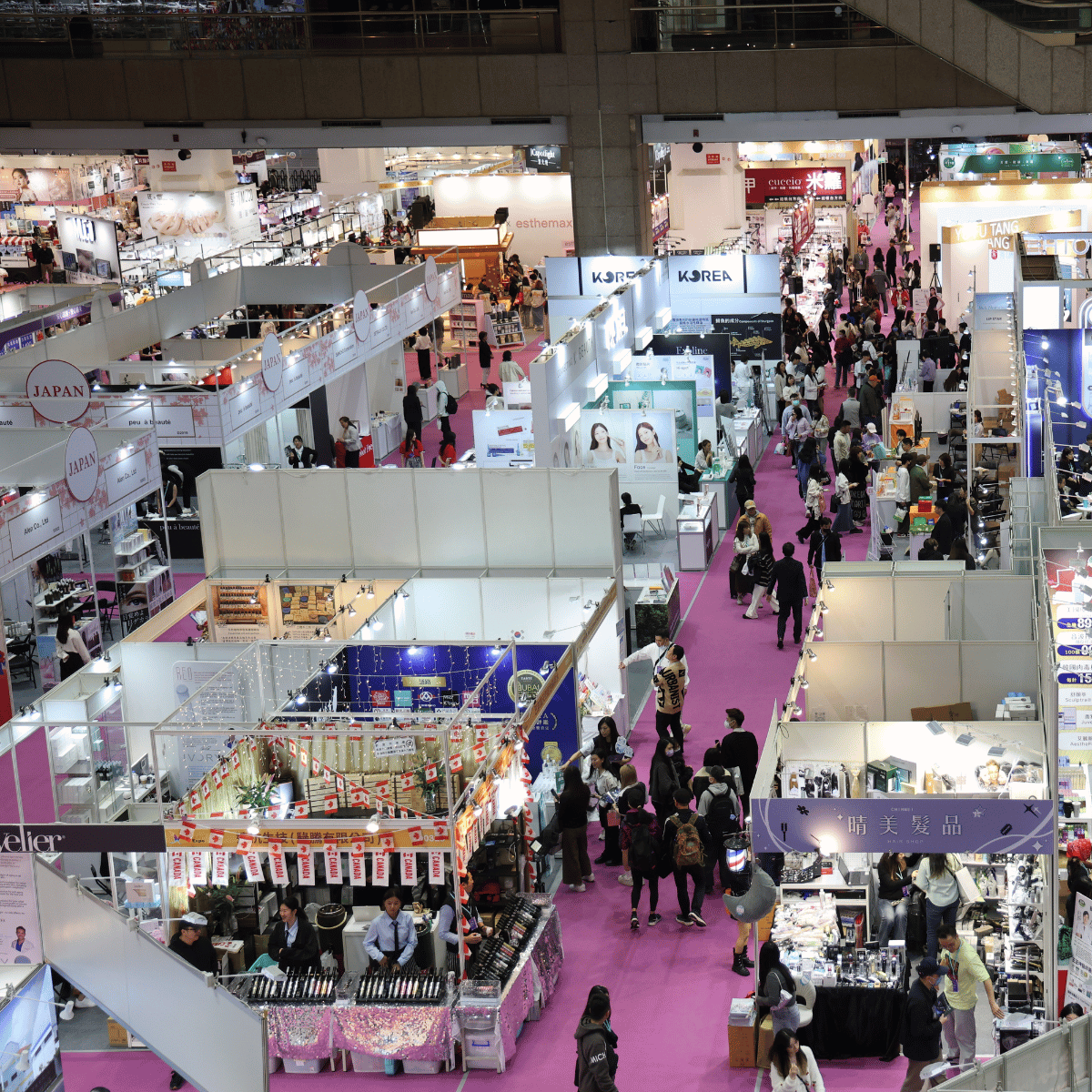
If you're considering entering the Taiwanese market, or weighing Taiwan as an entry point into the wider Asia market, exhibiting at Beautyworld Taipei is a practical way to meet your future responsible person, compliance partners, and buyers in the same trip.
More about beauyworld Taipei

This page is a general orientation for exhibitors and is not legal or regulatory advice. Taiwan's PIF requirements are set out in the Cosmetic Hygiene and Safety Act and the Regulations for Cosmetic Product Information File Management. Always confirm current requirements with the TFDA or a qualified cosmetic regulatory consultant before making compliance decisions.